

Table of Contents
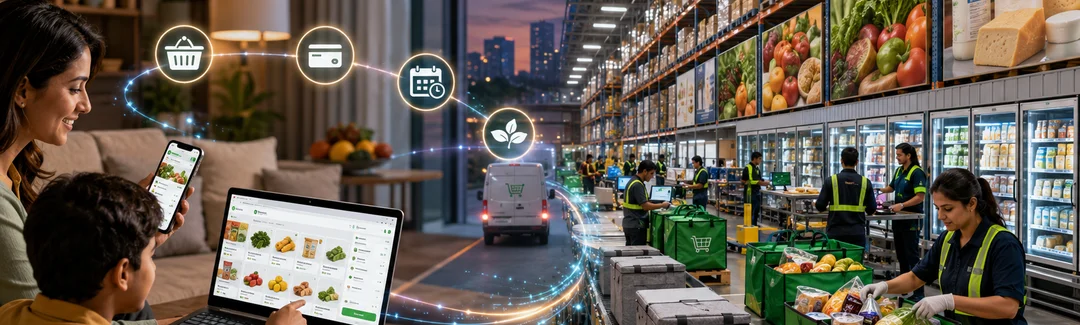
Online shopping has moved from a convenient alternative to a central pillar of the grocery and food retail market. What began as a niche offer for time-poor urban consumers is now embedded in everyday behaviour across income groups and geographies. The UK e-commerce logistics market for food and beverages is growing at roughly 9.5% annually, outpacing general logistics growth by a wide margin. That expansion places very different demands on warehouses depending on where an operator sits in the value spectrum.
For food retailers and brands, e-commerce food fulfilment is not simply a digital channel bolted onto an existing supply chain. It reshapes cost structures, operational complexity and service expectations. From value-led operators trying to protect thin margins, through premium players investing in automation and service, to mid-market retailers repurposing stores as mini fulfilment hubs, the approaches vary widely. Smaller consumer goods brands face their own set of challenges as they try to plug into systems designed for scale.
This article explores how warehouse strategies are evolving in response to online food shopping, the trade-offs different operators face and the practical challenges that come with fulfilling food orders at speed.
Why Food E-commerce Is Fundamentally Different
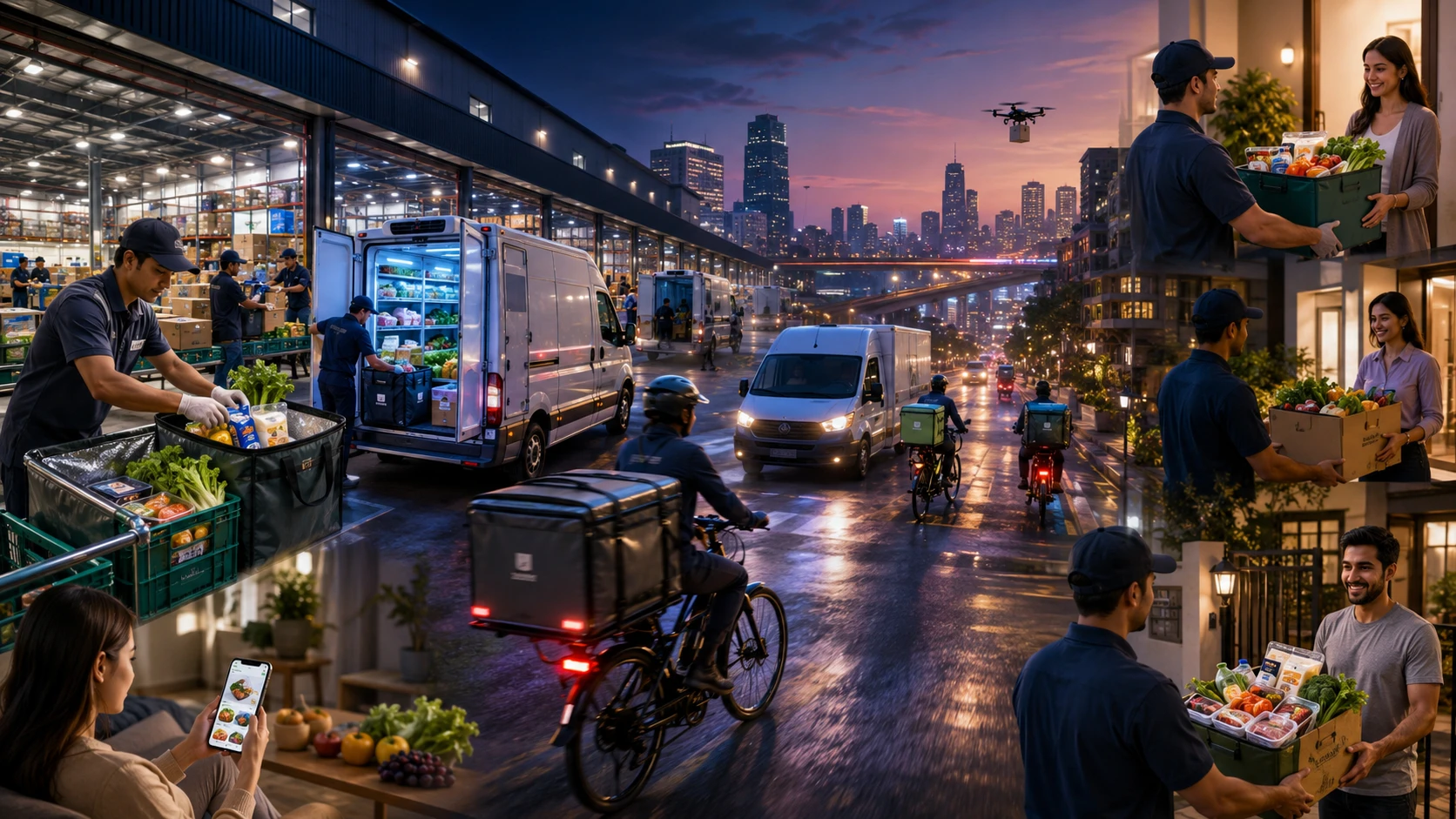
Non-food e-commerce can tolerate a degree of latency, variability and consolidation. Food cannot. Customers expect freshness, accuracy and rapid delivery, often within narrow time windows. A late parcel of books is an inconvenience. A late delivery of chilled food can mean a ruined meal.
Food fulfilment also brings layers of complexity that do not exist in general merchandise. Multiple temperature zones must be managed simultaneously. Shelf life becomes a picking decision, not just a stock management issue. Regulatory compliance is continuous rather than periodic. Waste, substitutions and refunds are far more visible to consumers.
Temperature-controlled warehouse space costs 30-40% more to build and operate than ambient equivalents, yet remains undersupplied across the UK. That cost premium cascades through the entire fulfilment chain, from storage through picking to last-mile delivery.
As online volumes grow, these pressures scale non-linearly. A warehouse that performs well at low order density can become unworkable once picking volumes rise, routes tighten and service expectations increase. This is why the question of how to adapt warehouses for e-commerce food fulfilment is strategic, not tactical.
“The warehouse used to be the cheapest part of the food supply chain. Now it's the part where you win or lose the customer.”
Michael Ostroumov, Co-founder, FLOX

The Value Operator Challenge: Protecting Margin at All Costs
For value-focused grocery operators, the rise of online shopping presents an uncomfortable dilemma. Their business models are built on simplicity, high throughput and ruthless cost control. E-commerce pulls in the opposite direction, adding labour, complexity and last-mile costs that are difficult to recover through pricing.
Many value operators have historically avoided online altogether or offered limited ranges and constrained delivery slots. Where they do engage, the approach is often cautious. Warehouses are adapted incrementally, using manual processes and minimal automation to avoid heavy capital investment. The emphasis is on limiting the service offer rather than maximising convenience.
In these environments, warehouse design prioritises speed and density over flexibility. Picking routes are short, SKU counts are tightly controlled and slow-moving items are often excluded from the online range entirely. Multi-temperature fulfilment is simplified by reducing chilled and frozen choices or by outsourcing parts of the operation to third parties.
The automation question
Warehouse labour costs across the UK continue to climb at roughly 4.5-4.7% annually, squeezing value operators from both sides. Automation could help, but the capital requirements sit awkwardly against a low-margin model. Most value operators end up somewhere in between: selectively automating high-volume picking lines while keeping the rest manual and flexible.
The challenge is that consumer expectations do not neatly segment by price point. Value shoppers still want reliability, availability and increasingly speed. Every added feature, from narrower delivery windows to broader ranges, pushes cost into a system that has little room to absorb it.
For value operators, the warehouse becomes a site of constant compromise. How much complexity can be introduced before the economics no longer work is an ongoing question, not one with a fixed answer.
Premium and Top-End Players: Complexity as a Differentiator
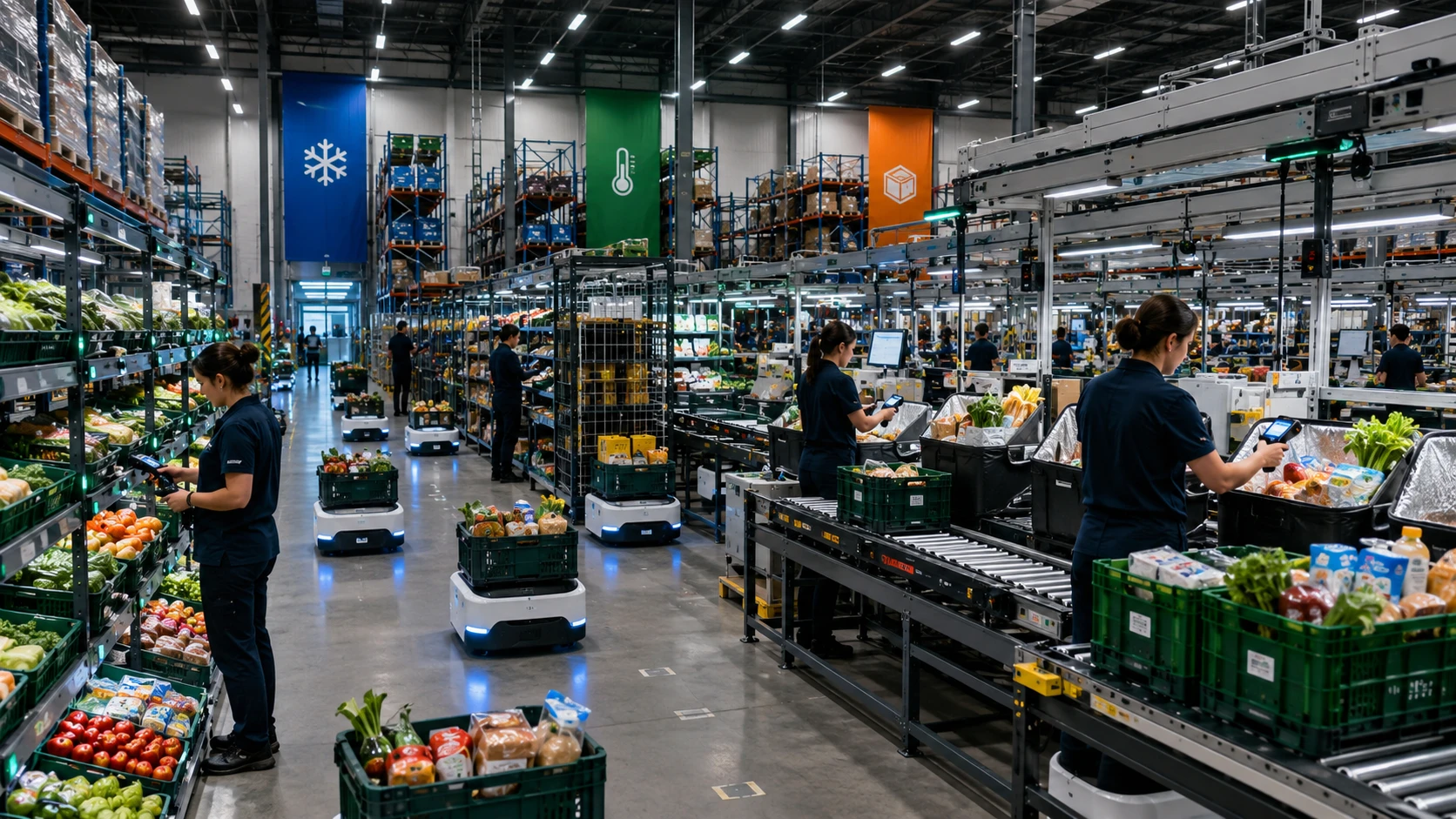
At the other end of the spectrum, premium retailers and online specialists have taken a fundamentally different view. For operators such as Marks and Spencer or Ocado, service quality and range depth are part of the brand promise. Complexity is not avoided but engineered.
Purpose-built fulfilment centres, high levels of automation and sophisticated software underpin these models. Warehouses are designed from the ground up to handle tens of thousands of SKUs across ambient, chilled and frozen zones. Shelf life is actively managed through system-driven picking rules. Orders are sequenced to optimise both freshness and delivery efficiency.
This approach requires significant capital investment and long planning horizons. Automated storage and retrieval systems, shuttle technologies and robotic picking are expensive and take years to deliver a return. They also lock operators into particular volume assumptions, which can be risky in volatile markets. Fully automated fulfilment facilities are projected to expand at an 11.3% compound annual growth rate through 2030 as operators try to offset labour shortages and rising wage costs.
The payoff is control. Premium players can offer wide ranges, late cut-off times and high order accuracy because the warehouse is built to support those outcomes. The cost per order falls as volume increases, and data from online demand feeds back into forecasting and range planning.
The risk for top-end operators lies less in operational feasibility and more in demand elasticity. Premium service only works if customers continue to pay for it, either directly through delivery fees or indirectly through higher basket values.
The Middle Ground: Stores as Mini Fulfilment Centres
Between these two poles sits the broad middle of the grocery market. These retailers often lack the scale or appetite for fully automated dark warehouses but cannot ignore online demand. The most common response has been to use existing stores as fulfilment assets.
Using stores as mini fulfilment centres allows retailers to enter or expand online quickly, with relatively low upfront investment. Picking is done from live shelves, often during off-peak trading hours, and orders are dispatched for local delivery or click and collect.
This model has clear advantages. Proximity to customers reduces last-mile costs and delivery times. Stock is already in place, minimising duplication. Capital expenditure is limited to picking equipment, training and IT integration.
The warehouse challenges do not disappear, though. They are simply distributed. Store layouts are rarely optimised for efficient picking. Aisles designed for shoppers become bottlenecks for pickers. Availability fluctuates as in-store demand competes with online orders. Multi-temperature handling is awkward, with chilled and frozen items requiring careful sequencing.
As online volumes grow, the strain on store operations increases. Picking interferes with the customer experience, labour costs rise and stock accuracy becomes critical. Many retailers reach a tipping point where stores alone cannot support further growth, forcing a hybrid approach that combines stores with regional fulfilment centres.
The success of this model depends heavily on execution. Retailers that invest in better picking technology, clear zoning and disciplined range management can make store-based fulfilment work surprisingly well. Those who treat it as a stopgap often struggle.
The Rise of Dark Stores and Micro-Fulfilment Centres
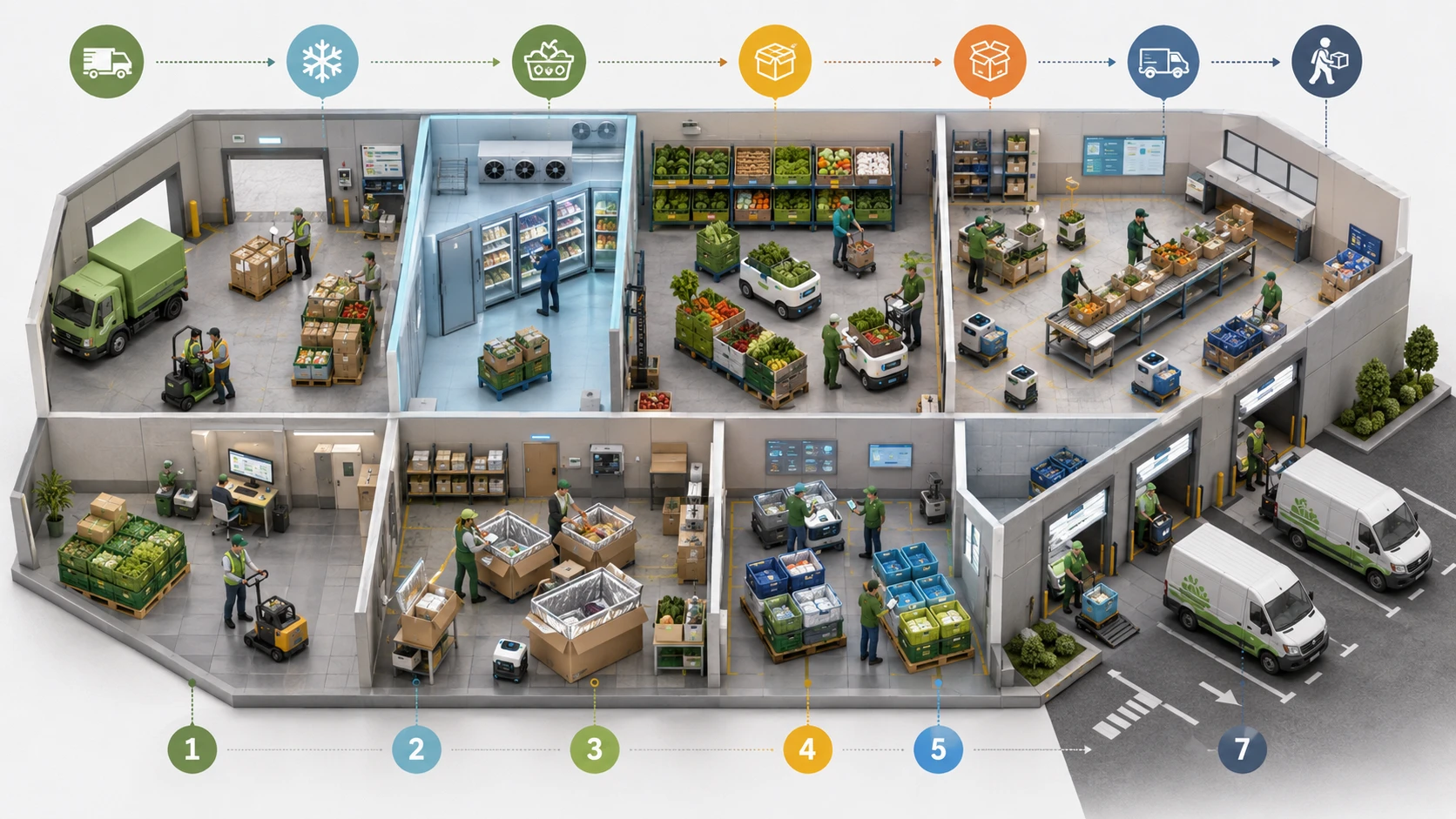
A newer model is gaining ground between store-based picking and large-scale automated warehouses. Dark stores and micro-fulfilment centres (MFCs) are purpose-built for online orders, typically occupying 3,000-10,000 sq ft in urban or suburban locations. They carry no walk-in customers.
The UK quick commerce market, valued at roughly $9.4 billion, is projected to reach $32.8 billion by 2032. That growth is pulling investment into smaller, faster fulfilment formats. Dark stores and MFCs are expanding at an 11.4% compound annual growth rate, driven by same-day and sub-two-hour delivery expectations that traditional warehouse networks struggle to meet.
Co-op has achieved 83% UK population coverage through a network of quick-commerce partners, placing fresh-food fulfilment firmly within urban catchments. Ocado has expanded its automated micro-fulfilment centre network to reduce last-mile costs and improve service speed in dense areas.
For food operators, these formats solve a persistent problem: getting chilled and frozen products to the customer fast enough to maintain quality without running a full-scale distribution centre in every city. The trade-off is range. MFCs carry 5,000-8,000 lines versus 30,000 or more in a national fulfilment centre. For a midweek top-up shop, a limited range delivered in 30 minutes can beat a full range delivered tomorrow.


John Atcheson
Co-Founder & CEO of Circular Way
Chain Reaction Podcasts
Why Circular Retail Is a $2 Trillion Opportunity Most Retailers Are Missing
Up to 90% of consumer products reach landfill within years of purchase. John argues the real opportunity isn't recycling — it's designing products for reuse from day one.
Implications for Small Consumer Goods Brands
Small and emerging food brands face a very different set of questions. They rarely control the warehouse and must instead adapt to the requirements of retailers, wholesalers and third-party logistics providers.
For these brands, online growth can be both an opportunity and a burden. Digital channels offer access to customers without the need for national store listings. At the same time, fulfilment expectations are often higher than for traditional wholesale. Packaging must be robust enough for e-commerce handling. Shelf life becomes critical, as slow-moving stock in a fulfilment centre can quickly become unsellable. Minimum order quantities and delivery frequencies imposed by operators can strain cash flow.
Small brands need to be realistic about where they fit. Trying to service every channel often leads to complexity that overwhelms limited resources. A focused approach, choosing partners whose fulfilment models align with the product's characteristics, is usually more sustainable.
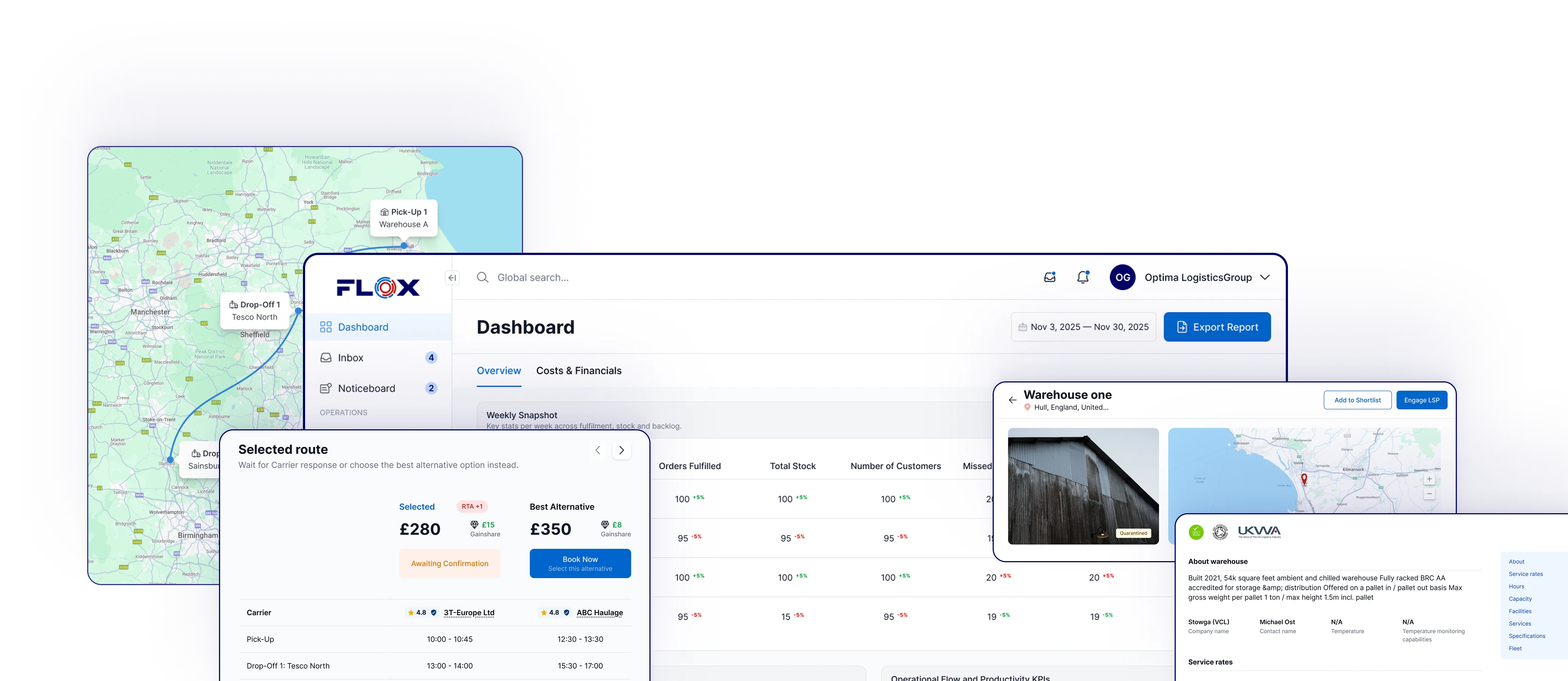
Some brands choose to fulfil direct-to-consumer orders from small warehouses or shared facilities, retaining control but accepting higher per-unit costs. Others integrate with specialist food fulfilment providers who can handle multi-temperature requirements at a lower scale. Platforms like FLOX connect smaller operators with warehouse providers and 3PLs that already have the infrastructure, avoiding the need to build from scratch.
Operational Challenges That Define E-commerce Food Fulfilment
Regardless of size or positioning, certain challenges are universal in food fulfilment.
Multi-temperature operations
Handling ambient, chilled and frozen products within a single order is one of the defining complexities of grocery e-commerce. Warehouses must maintain strict temperature control while enabling efficient picking. This often requires physical segregation, specialised equipment and carefully timed workflows. Temperature-controlled space commands 30-40% higher build and operating costs than ambient storage, yet supply has not kept pace with demand.
Shelf life management
Unlike traditional distribution, e-commerce picking decisions directly affect how long a customer has to consume a product. Systems must balance first-in first-out principles with promised freshness. This becomes harder as SKU counts rise and demand becomes less predictable.
Fast and slow-moving SKUs
Online ranges tend to be broader than store ranges, bringing a long tail of slow-moving products. These items take up space, complicate picking routes and increase the risk of waste. Fast movers must be positioned for rapid access. Warehouse layout and slotting strategy are therefore critical.
Speed of consumer demand
Same-day and next-day delivery expectations compress fulfilment windows. Cut-off times move later, leaving less room for error. Labour planning becomes harder, and peak demand can shift rapidly due to weather, promotions or external events. Parcel volumes in food and drink categories are growing at roughly 17% year-on-year, adding further pressure to already stretched operations.
Regulatory requirements
Food safety regulations apply as rigorously to e-commerce as to any other channel, and often more so. Traceability, allergen control, hygiene and temperature records must be maintained at scale. Compliance failures can halt operations overnight.
Designing Warehouses for Resilience, Not Perfection
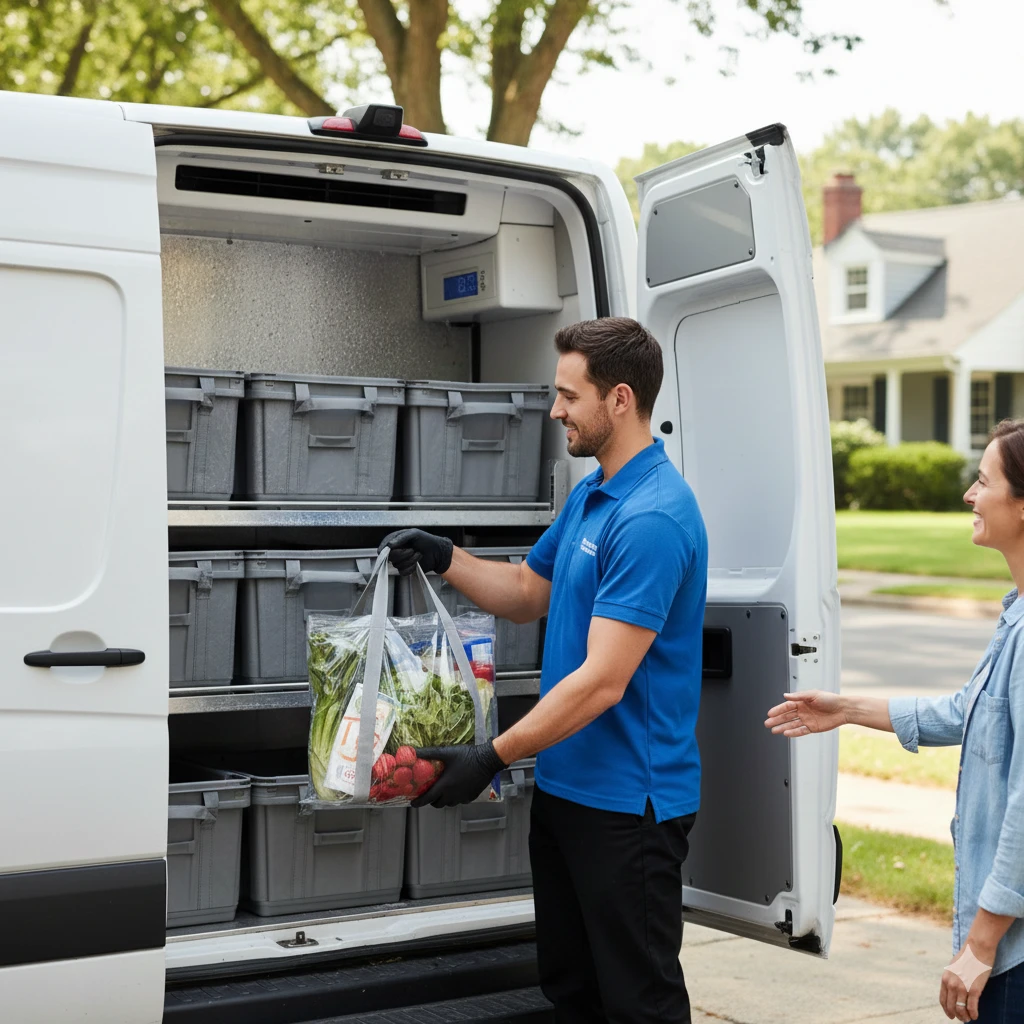
One of the lessons of recent years is that demand patterns can change quickly. Warehouses designed for a single optimal scenario struggle when volumes spike or channels shift. Flexibility has become as important as efficiency.
This does not mean avoiding automation or investment. It means designing systems that can scale incrementally, accommodate range changes and integrate new fulfilment models. Modular automation, adaptable layouts and data-driven decision making are becoming more valuable than monolithic solutions. Approximately 70% of all warehouse space leased recently has been new-build, reflecting a market-wide shift toward facilities that support high-capacity automation and meet ESG requirements from the outset.
For many operators, the future is likely to be a network rather than a single warehouse. Regional hubs, store-based fulfilment and specialist partners working together, each playing to their strengths. Orchestrating that kind of multi-party operation is where platforms like FLOX add value: connecting warehouse providers, 3PLs, hauliers and buyers on a single coordination layer so that the network functions as one system rather than a collection of siloed relationships.

Explore storage and fulfilment solutions that give your business flexibility and the support it needs to grow.
No Single Model, but Clear Choices
The rise of online shopping has permanently altered the food supply chain. Warehouses are no longer invisible infrastructure but a critical part of the customer experience. How they are designed and operated reflects strategic choices about cost, service and brand positioning.
Value operators must decide how much complexity they can afford. Premium players must make sure their investments continue to deliver returns. Mid-market retailers need to balance speed and scale as they stretch store-based models. Small brands must choose partners and channels carefully to avoid being overwhelmed.
What unites all of them is the need to treat e-commerce food fulfilment as a core capability, not an afterthought. In food retail, the warehouse is where promise meets reality. Those who get it right build trust and loyalty. Those who get it wrong feel the cost very quickly.
Subscribe to our newsletter.
Stay up to date with practical insights and useful logistics content
FAQs
E-commerce food fulfilment is the process of storing, picking, packing and delivering food products ordered online. It differs from general e-commerce because food requires multi-temperature handling (ambient, chilled and frozen zones), strict shelf life management and regulatory compliance around food safety and traceability. Delivery windows are tighter, substitution decisions are more complex and errors are more visible to the customer.